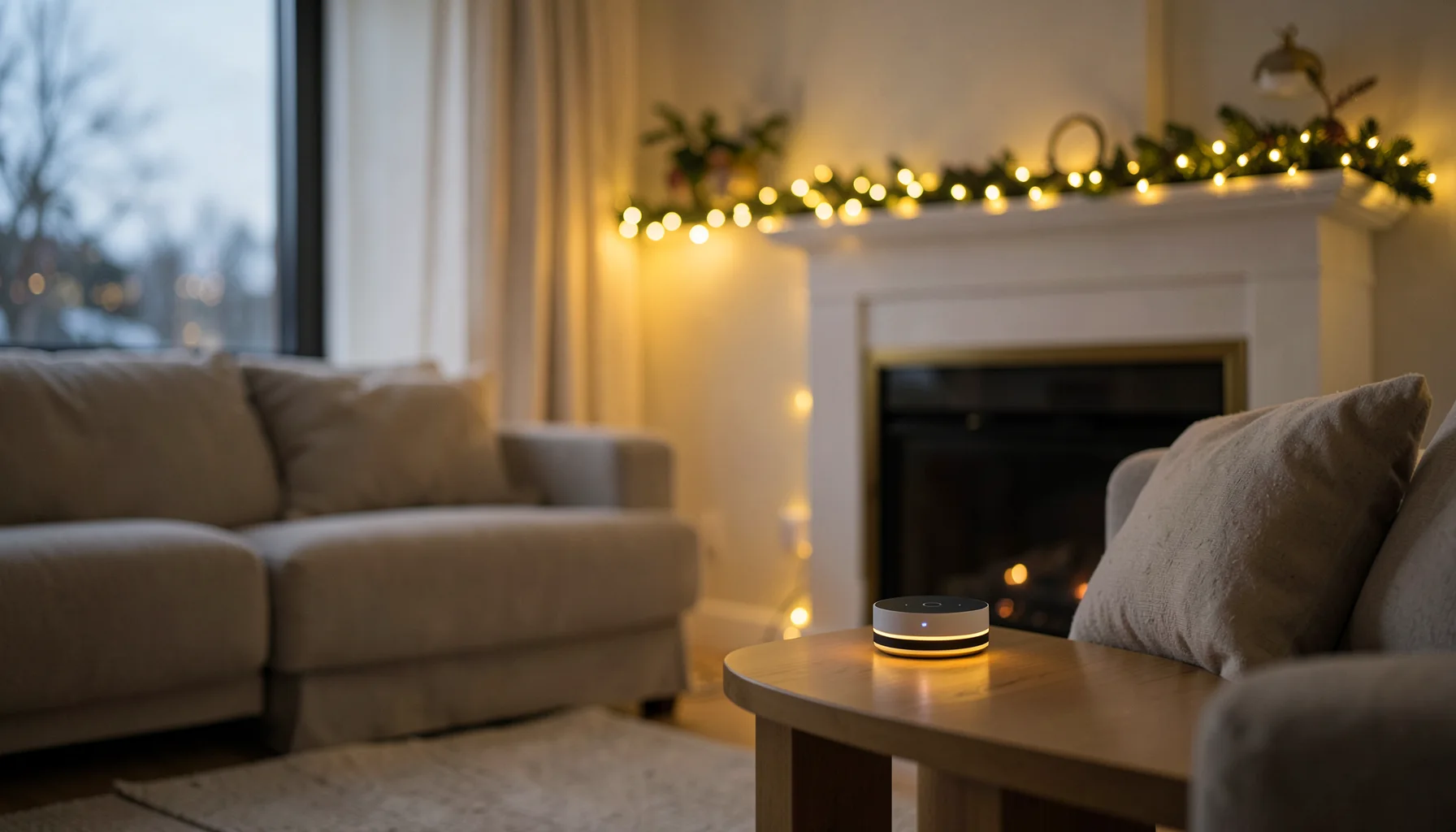
Short answer: You don’t need special “smart Christmas lights” — a reliable Zigbee smart plug plus Home Assistant turns any regular light string into an automated, schedulable, sensor-triggered display that works locally, even when your internet goes down.
What You Need for Smart Zigbee Christmas Lights
The good news: Christmas lighting is one of the cheapest smart-home upgrades you can do. You need four things:
- Home Assistant on any always-on box (a used Mini PC or Raspberry Pi is plenty) — if you’re new, start with our Home Assistant Zigbee starter guide.
- A Zigbee coordinator — the Sonoff Zigbee 3.0 USB Dongle Plus-E is the de-facto standard in the Home Assistant community; see why in Best Zigbee Coordinator.
- Zigbee smart plugs for your light strings — one per string, rated for the wattage (our picks in Best Smart Plug).
- IP-rated hardware if any part sits outdoors — plus watertight connectors on every outdoor join.
Our Setup: Smart Plugs for Lights, not just Light Strips
Dedicated “smart light strips” are neat, but for most houses a smart plug per light string is more flexible. Our pick for this job is the SONOFF S60ZBTPF: it reports energy usage (so Home Assistant can tell when a string has burned out), acts as a Zigbee repeater to extend your mesh, and handles the wattage of standard outdoor-rated strings with ease.
Two things to check before buying plugs for lights:
- Max load — most Zigbee plugs handle 10–15 A. Add up your strings per plug and keep 20% headroom.
- Zigbee 3.0 — modern plugs pair faster and strengthen the mesh better than first-gen devices. The S60ZBTPF is Zigbee 3.0, exactly what you want for a reliable winter mesh (cold light strings + marginal signal = the combination that exposes weak routers).
Automations That Make the Season Effortless
This is where Zigbee + Home Assistant beats any app-controlled brand system (which is usually Wi-Fi and cloud-dependent). A few we run every December:
- Sunset on, 23:00 off — a simple time/sun trigger with a fade-out automation on dimmable plugs.
- Midnight dim — drop brightness to 20% after midnight instead of killing the display.
- Motion-triggered porch lights — link your door sensor (Best Zigbee Door/Window Sensor) so the path outside lights up when someone arrives.
- Away mode — turn the whole tree off when nobody is home (presence detection); it also saves power.
- String-failure alert — with the S60ZBTPF’s energy monitoring, Home Assistant notifies you when an “on” string draws ~0 W. No more discovering a dark string on Christmas morning.
Buying Smart Christmas Lights: What to Check (Black Friday Edition)
If you’re buying now, a few honest rules that save money and frustration:
- Buy plug and string brands, not “smart Christmas light” sets. Branded “smart” fairy-light sets are usually Wi-Fi/cloud app products that break on post-season firmware updates or lock you into an app. A normal string + Zigbee smart plug is cheaper and stays in your Home Assistant ecosystem forever.
- Check the IP rating for outdoor use (IP44+) and confirm the plug matches.
- Watch for Black Friday and seasonal price drops on the exact products — smart-plug ASINs fluctuate seasonally, so adding an item to your basket early lets you catch the dip instead of paying full price in a mid-December panic.
- Avoid cloud-only brands — if a product needs an account and an app to work, Home Assistant can’t reliably control it later.
Practical Considerations & Safety
The Zigbee mesh heals itself and extends as you add powered devices — so an outdoor light plug at the end of the garden actually improves your whole network. Keep an eye on the total wattage per plug, use IP-rated gear outdoors, and protect every outdoor connection with waterproof covers. Because Zigbee runs locally, your lights still respond instantly if your internet provider stutters during the storm of the year — the exact moment you do not want your display to fail.
The Bottom Line
For most people, the smartest Christmas lighting setup in 2026 is not a fancy “smart” light set — it’s a regular string, a Zigbee smart plug per string, and a few Home Assistant automations. You get sunset scheduling, dimming, presence-aware switch-off and even burnout alerts — all local, all reliable, and ready for the Black Friday window if you start early.