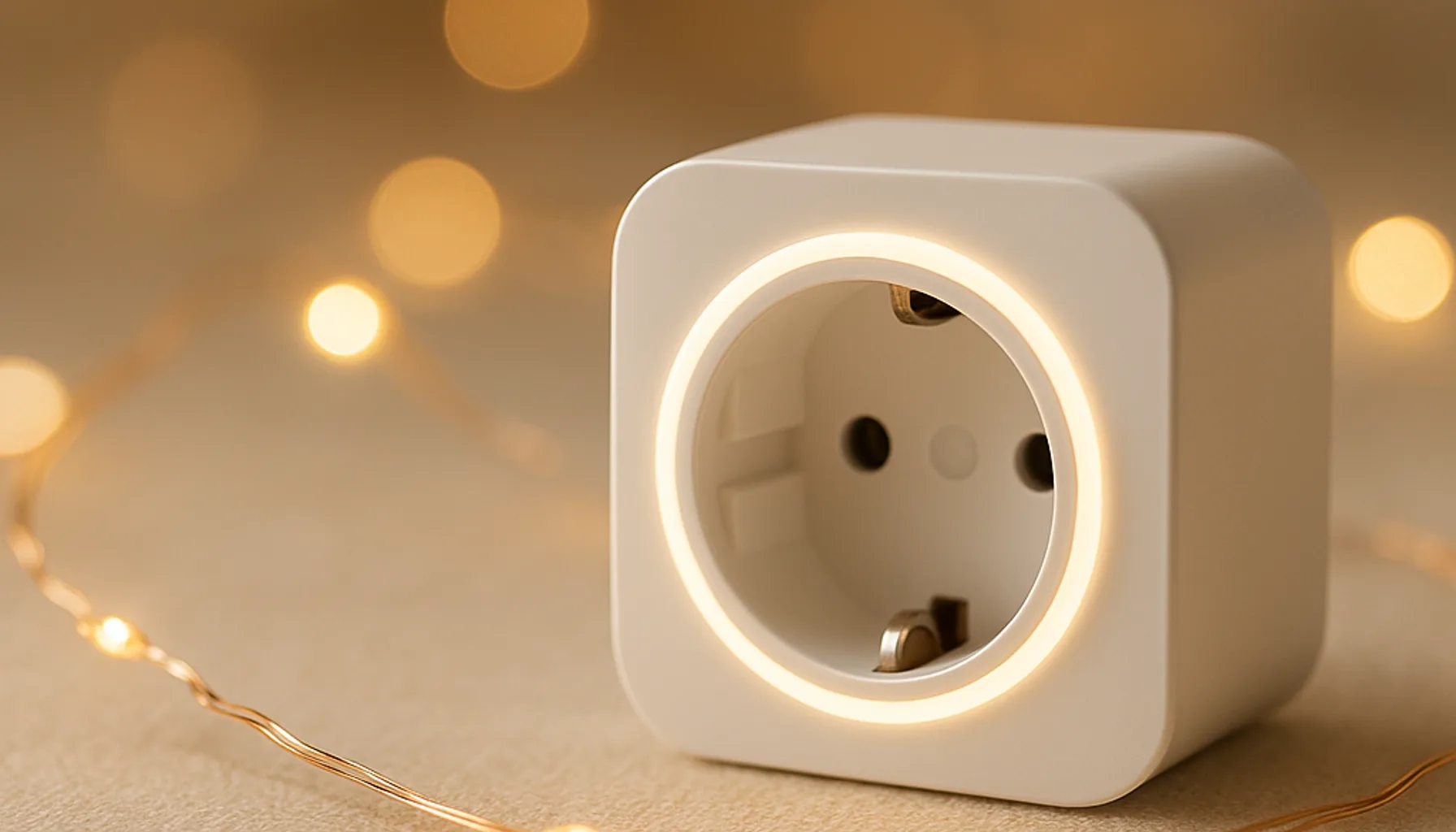
TL;DR: you don’t need special “smart Christmas lights.” In plain terms, the best Zigbee Christmas-light setup for Home Assistant in 2026 is a regular light string plugged into a Zigbee smart plug, with a Zigbee coordinator on the other side to talk to it. That combo gives you on/off scheduling, sunset triggers, dimming on compatible strings and failure alerts — all locally, with no cloud app and no annual firmware roulette.
What “best” means here
Let’s keep it simple. When you search for the “best Zigbee Christmas lights,” you might expect a fancy light strip with Zigbee built in. Brands do sell those, but they’re the exception, and they’re usually either Wi-Fi/cloud products with a Zigbee sticker or premium priced for very little gain.
Think of it like this: the light string already works — it’s the switch that isn’t smart. Put a Zigbee smart plug on it and the plug becomes the switch Home Assistant can control. That’s the whole trick. It costs a fraction of a “smart” set, stays in your ecosystem forever, and works with the strings you already own or the cheap ones every supermarket sells in November.
So “best” for almost every home = the most reliable Zigbee smart plug you can find, matched to your string. Everything else is polish you can add later.
The pick at a glance
| Option | Why | Great for | Watch out for |
|---|---|---|---|
| SONOFF S60ZBTPF Zigbee smart plug | Energy monitoring, Zigbee repeater, Zigbee 3.0 | The smart-switch approach, outdoor-rated with care | Check your string’s wattage vs. the plug’s max load |
| Your existing light string | No cost, already tested in your home | Any regular fairy or string lights | Not IP-rated if it sits outdoors |
| A Zigbee coordinator (SONOFF ZBDongle-E) | The brain that talks to the plug | Anyone already running Home Assistant | None, if you have Home Assistant running |
The S60ZBTPF is the same workhorse we recommend in our tested smart-plug guide, and it’s the one we keep coming back to for lights: it reports real energy use, so Home Assistant can tell when an “on” string is pulling zero watts (read: a bulb or a string has died). It also acts as a Zigbee repeater, which means an outdoor plug at the end of the garden quietly strengthens your whole mesh — the same job we break down in plain terms in our Zigbee router vs. coordinator explainer.
What we run
To be straight about honesty: our real-home setup follows exactly this recipe. We run a SONOFF ZBDongle-E coordinator with Zigbee2MQTT, and each Christmas string is on its own SONOFF S60ZBTPF smart plug. It’s the same wiring we document step by step in our Zigbee Christmas-lights setup guide. We don’t claim to have stress-tested every brand and model on the market — no honest review of a single setup can. What we do claim is that this approach has been boring-reliable for us through multiple seasons: sunset on, late-night dim, “away” off, and a zero-watt alert the first time a string died.
Choosing the right plug for your strings
If you’re buying this season, the plug matters more than the lights. Three things to check, in plain terms:
- Match the load. Add up the wattage of everything you plug in and keep ~20% headroom over the plug’s max. Zigbee plugs commonly handle 10–15 A; outdoor string sets are usually well inside that, but never guess — read the plug’s rating.
- Prefer Zigbee 3.0. Modern plugs pair faster and strengthen the mesh better than first-gen devices. The S60ZBTPF is Zigbee 3.0, exactly what you want when cold outdoor strings and a distant signal are exposing weak links.
- Respect the outdoors. If any part sits outside, the plug needs IP-rated (IP44+) hardware and a watertight connector. A plug made for indoors on a damp December doorstep is a recipe for a tripped breaker at best.
What you need to run it
You need a small hub of parts, most of which you likely have if you’re already using Home Assistant:
- A Zigbee coordinator — the SONOFF ZBDongle-E is the community de-facto standard; see our Best Zigbee Coordinator for why.
- A Zigbee smart plug per string — our best-smart-plug guide has the full comparison.
- A few minutes to pair — plug the string into the plug, pair it through ZHA or Zigbee2MQTT, give it a name, and you’re scheduling lights in Home Assistant.
Pair the plug next to the coordinator first, confirm it joins, then move it to its final spot so it settles into the mesh cleanly — the same placement playbook as our Zigbee range guide, since a distant outdoor plug benefits from having a solid path back to the dongle.
The honest caveats
- Most strings aren’t dimmable through a plain plug. A smart plug is an on/off switch; you get scheduling, not per-bulb colour or brightness, unless your string supports it and the plug passes the signal through. If dimming is a must, you need dimmable-compatible hardware — set expectations before you buy.
- The plug is still a switch with a max load. Heating-style strings, multiple heavy sets on one plug, or a string drawing near the plug’s limit are the cases to respect. Keep headroom and read the rating.
- “Verified” is real but not exhaustive. The products we link were live-checked on the EU marketplaces in September 2026. Same ASIN on amazon.co.uk/.de/.nl usually means the same product, but double-check the seller and the exact variant before ordering.
Bottom line
Buy a reliable Zigbee smart plug like the SONOFF S60ZBTPF, plug it into a Zigbee coordinator, and you’ve got the best Zigbee Christmas lights for Home Assistant — because you’ve made your lights smart instead of replacing them with an overpriced, cloud-dependent set. Sunset schedules, away mode, dimming and string-failure alerts all run locally, and it all survives a winter storm better than any app-controlled brand system. If you want the full step-by-step wiring, our setup guide has you covered.
Prices and availability checked 2026-10-28. Commissions are earned from qualifying purchases — see our affiliate disclosure.